“Sustainable and thoughtful engineering practices underpinned this year’s Autumn School”#
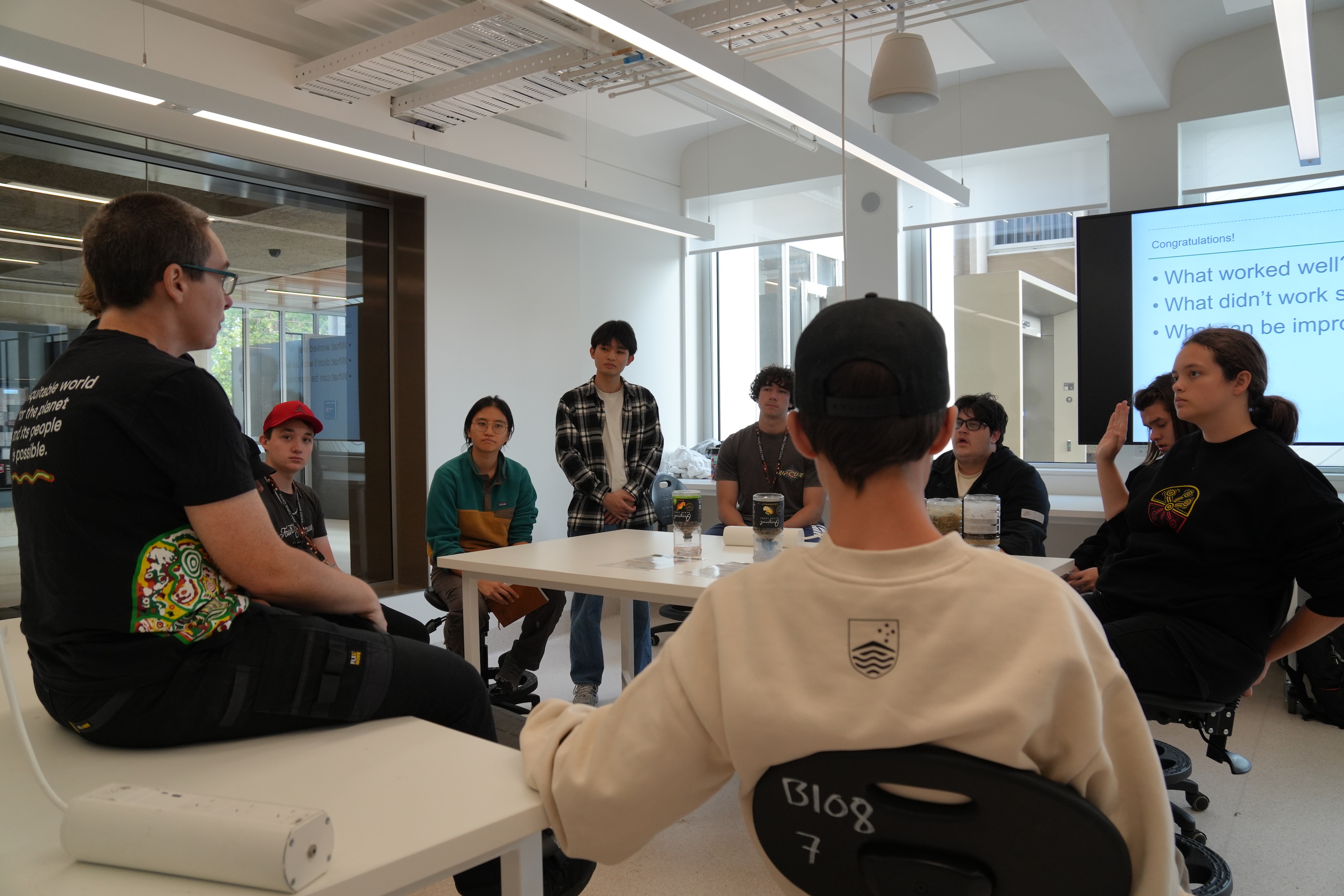
Last week The School of Engineering and Tjabal Centre co-hosted a group of Indigenous high school students for the National Indigenous Engineering Autumn School. The students travelled from all corners of the continent to spend a week on Ngunnawal and Ngambri Country and learn about the engineering degree at ANU and about university life.
The program opened with Indigenous perspectives in design, guided by Wiradjuri woman dr kate harriden who is a leader in decolonising current water management approaches and an advocate for Indigenous perspectives in engineering design and education. Students used hydrophones to listen to Sullivans Creek and were encouraged to stay conscious of their surrounds and consider their personal connections to water as part of the activity. The session had a lasting effect on students, who took this awareness with them through their week of engineering sessions.

Dr Jeremy Smith and Shay Taylor gave students an introduction to the unique systems engineering approach, which is embedded in the School of Engineering programs, equipping graduates with both deep expertise in their chosen field and the ability to design and analyse complex systems with social, environmental, and economic contexts.
Dr Daniel Walter led a session in decarbonising energy, where students learned how energy is used by our civilisation and what carbon-free technologies we will need to adopt in the decades ahead in order to address the pressing challenges of climate change.
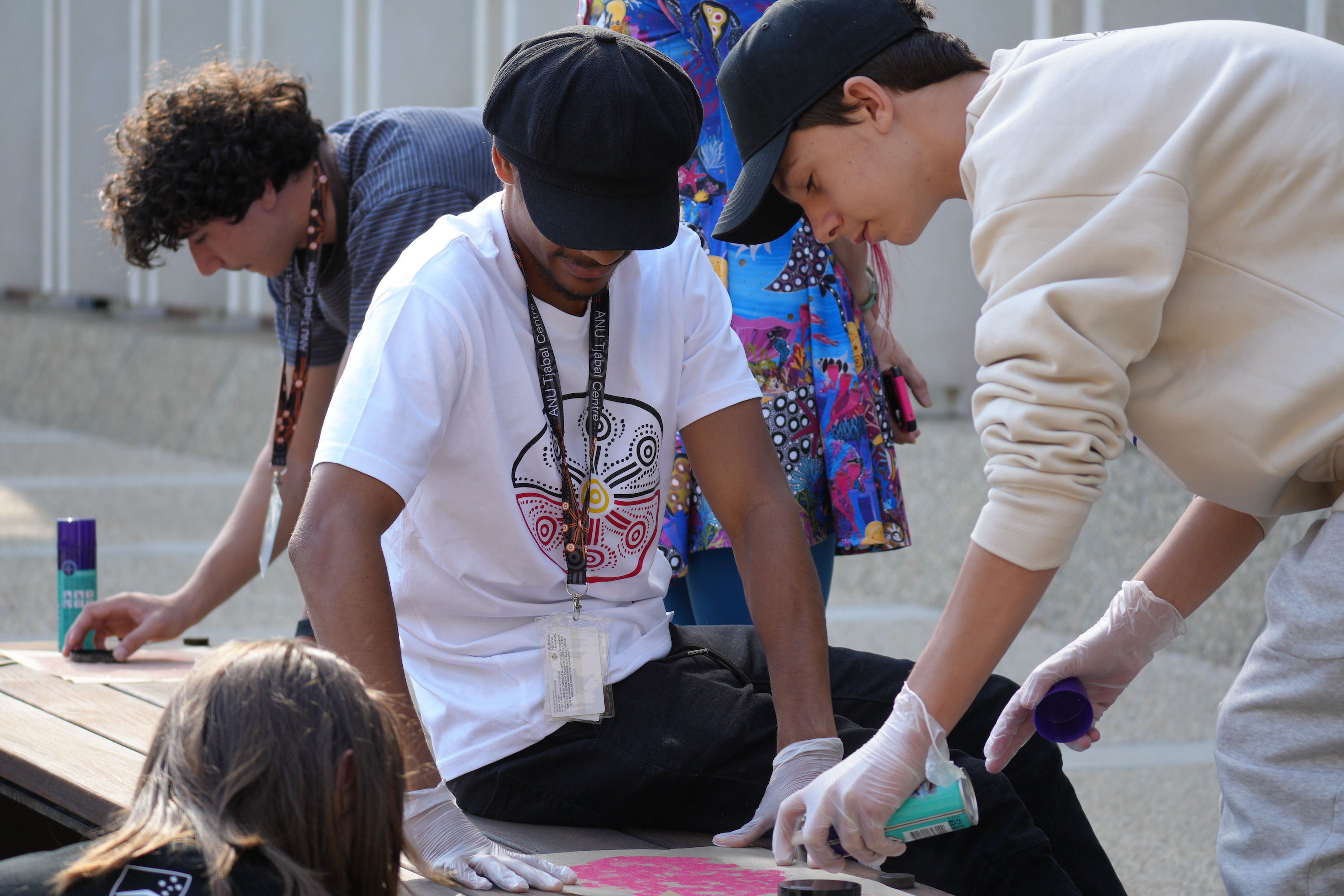
Dr Kiara Bruggeman shared her research in tissue engineering using nanotechnology to design materials that mimic healthy brain tissue. Students engaged in a hands-on activity to make magic sand- an exercise which brilliantly demonstrated how nanotechnology and chemistry are used to mimic natural systems and technologies.
An evening of Star Gazing on Mt Stromlo using outreach telescopes was guided by Gamilaraay astrophysics PhD scholar Peter Swanton. Students learned about Indigenous Astronomy and Sky Knowledge and the importance of Indigenous perspectives in western science, while Dr Tony Travouillon spoke with students about his research in instrumentation for astronomy and space research.
Water remained a key concern in sessions led by Dr Danlu Guo, where students were asked to consider western engineering infrastructures for waterway monitoring and management. A Water For Life workshop led by Clare Idriss with Engineers Without Borders introduced students to Humanitarian engineering and the cultural, logistical and ethical considerations involved in projects such as water sanitation.
All involved had a fantastic time this Autumn School. A huge mandaang guwu to the Tjabal Centre, whose houseparents and mentors ensured that students were well-fed, well-cared for and supported throughout the week.
Mandaang guwu (Thank you) to Commonwealth Bank of Australia for their generous support of this program.